EMS training, explained without the jargon
What it is, what it feels like and why twenty minutes a week is enough. Everything you would want to know before you try it in Leixlip.
What is EMS?
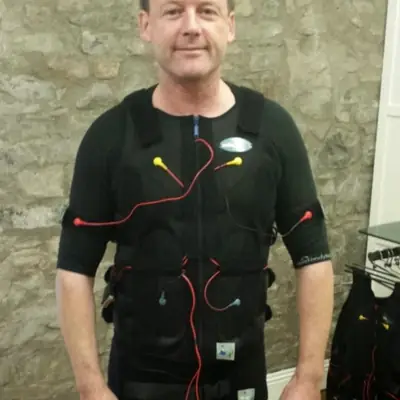
EMS stands for electrical muscle stimulation. Your muscles already run on tiny electrical signals: every time you lift a cup, your brain sends an impulse down a nerve and the muscle contracts. EMS adds a second signal from outside, through pads held against your skin by a fitted suit.
On its own that would do very little. The training effect comes from combining the two. You hold a squat or a lunge, the impulse switches on, and the muscle has to work against both at once. Far more muscle fibres fire than you could recruit by willpower alone, including the deep stabilising muscles that are hard to reach in a normal workout.
Physiotherapists have used the same principle for decades to rebuild muscle after injury. Whole-body EMS training takes it from one muscle to eight muscle groups at a time.
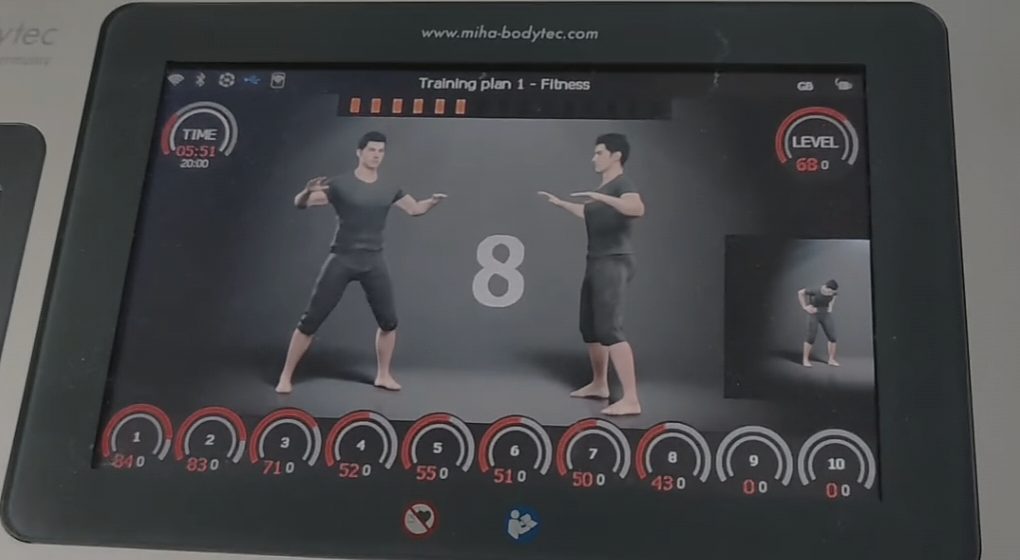 Eight dials
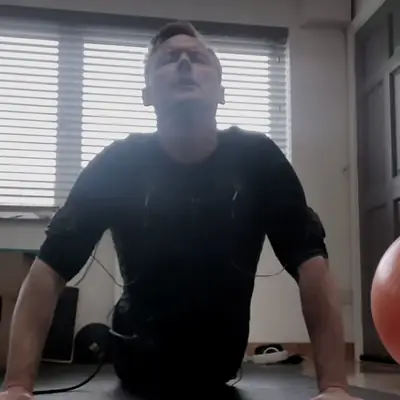
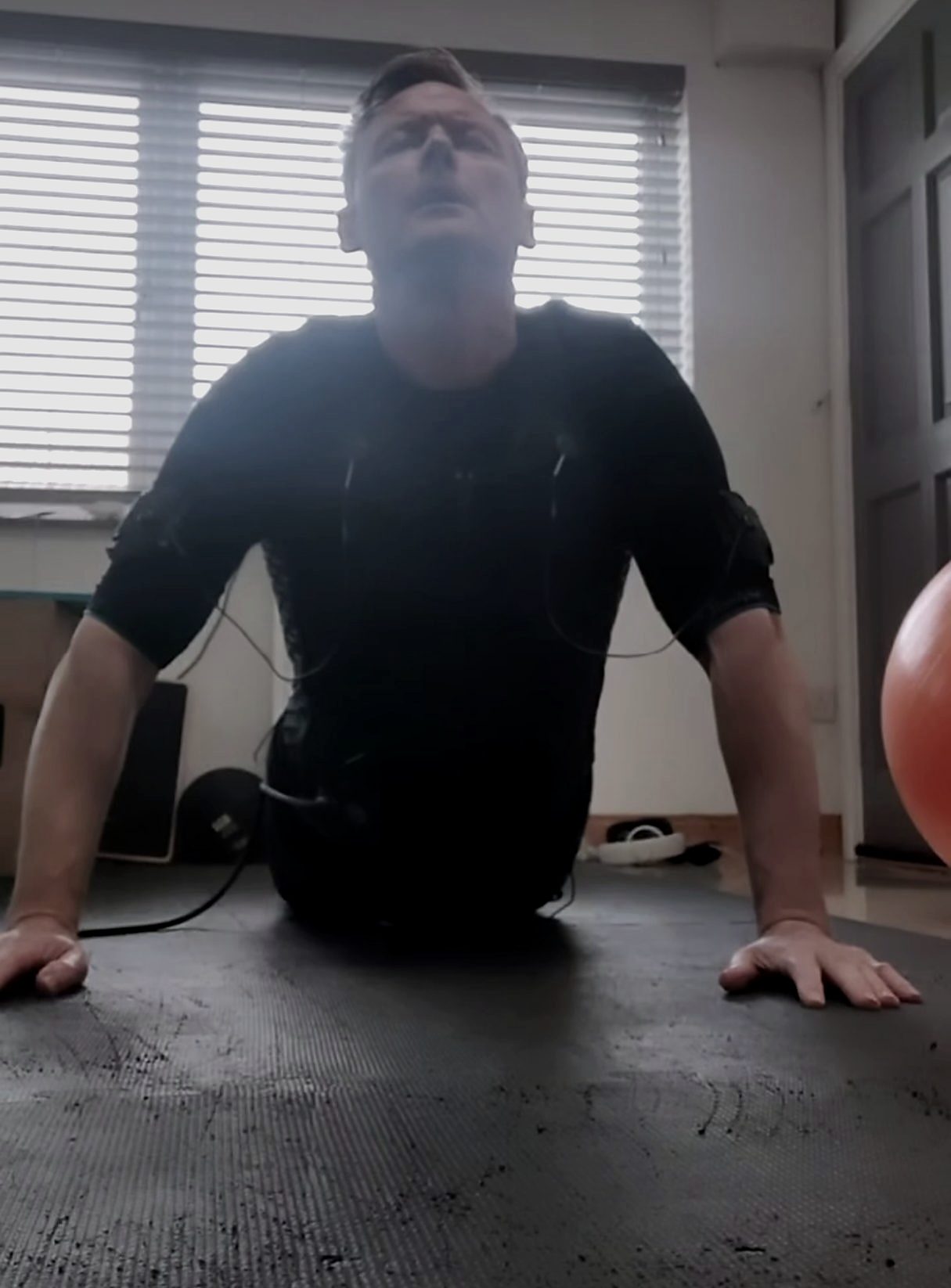 Impulse on
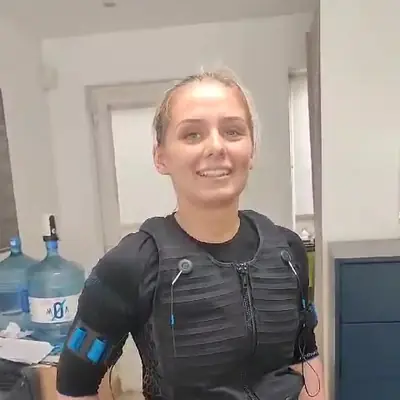
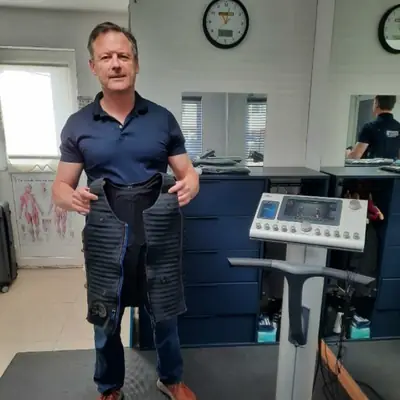
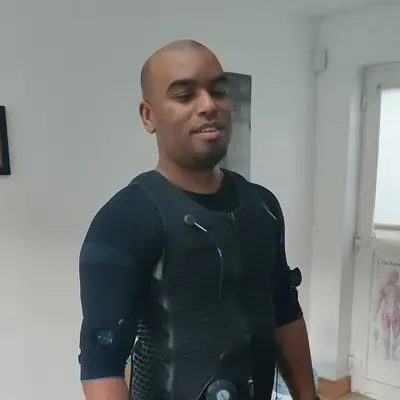
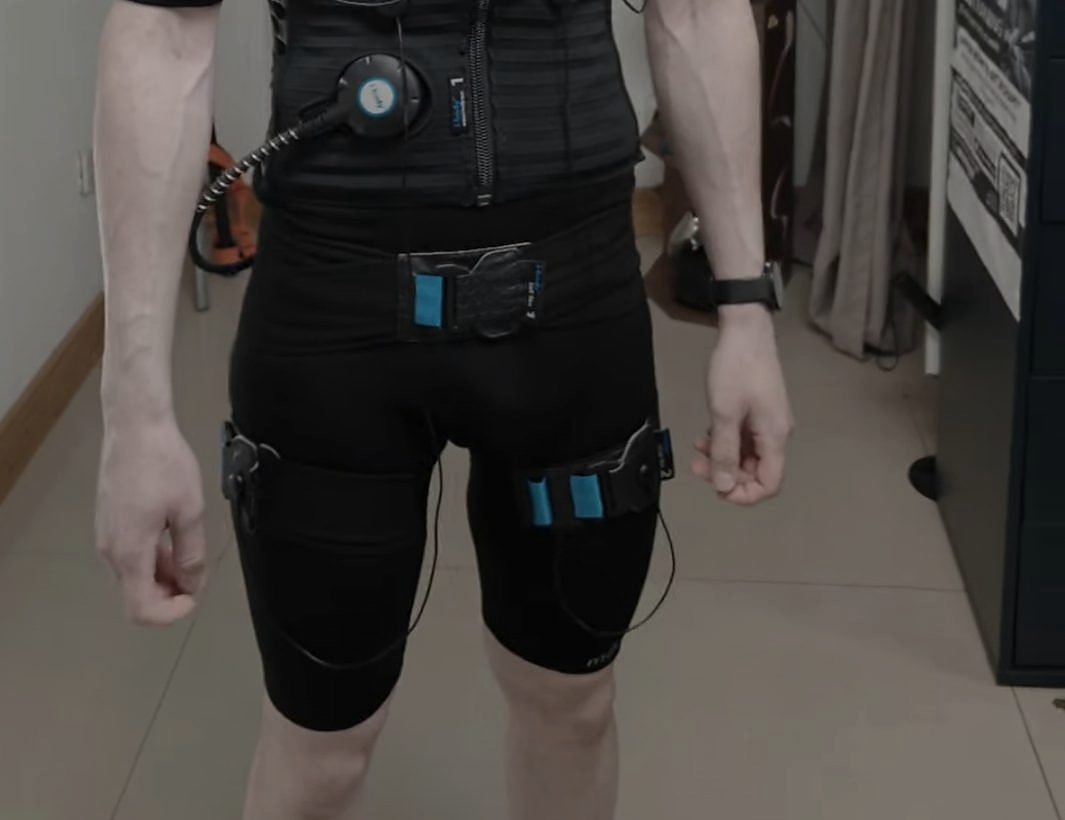 Suit up
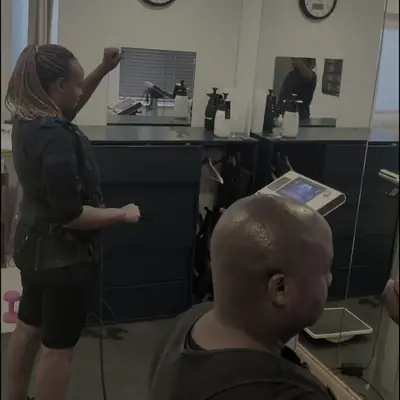
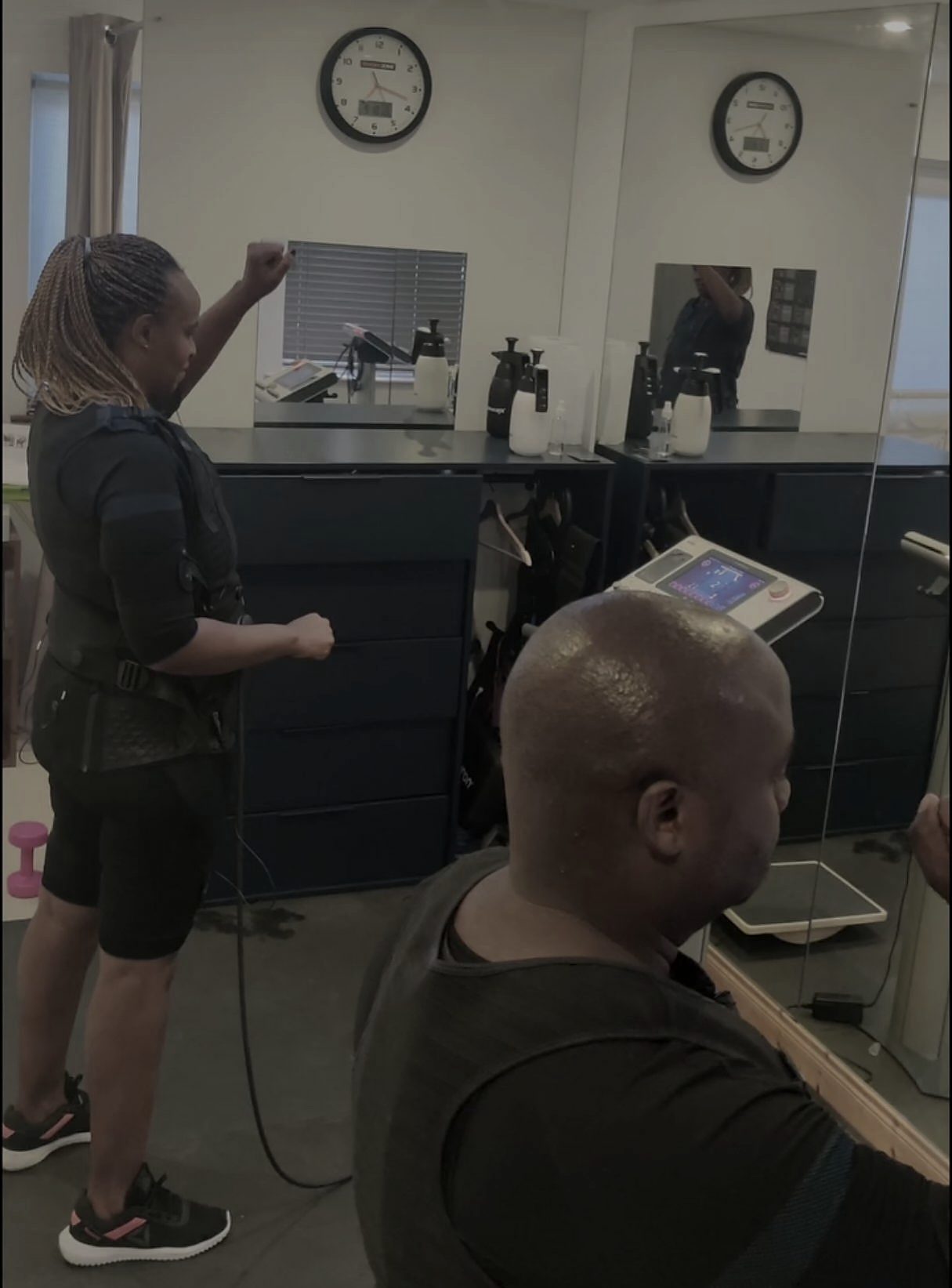 One-to-one
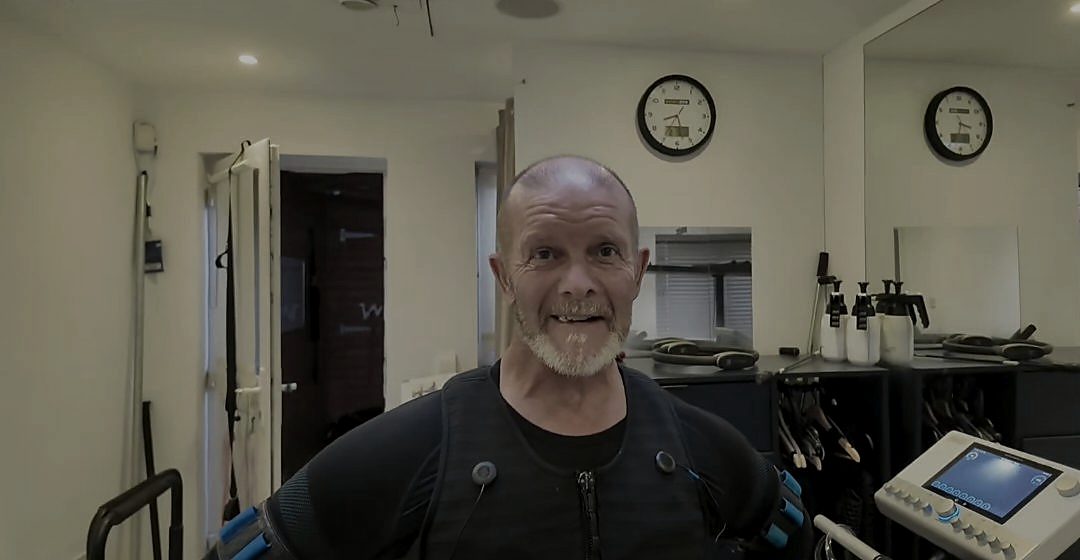 Twenty minutes
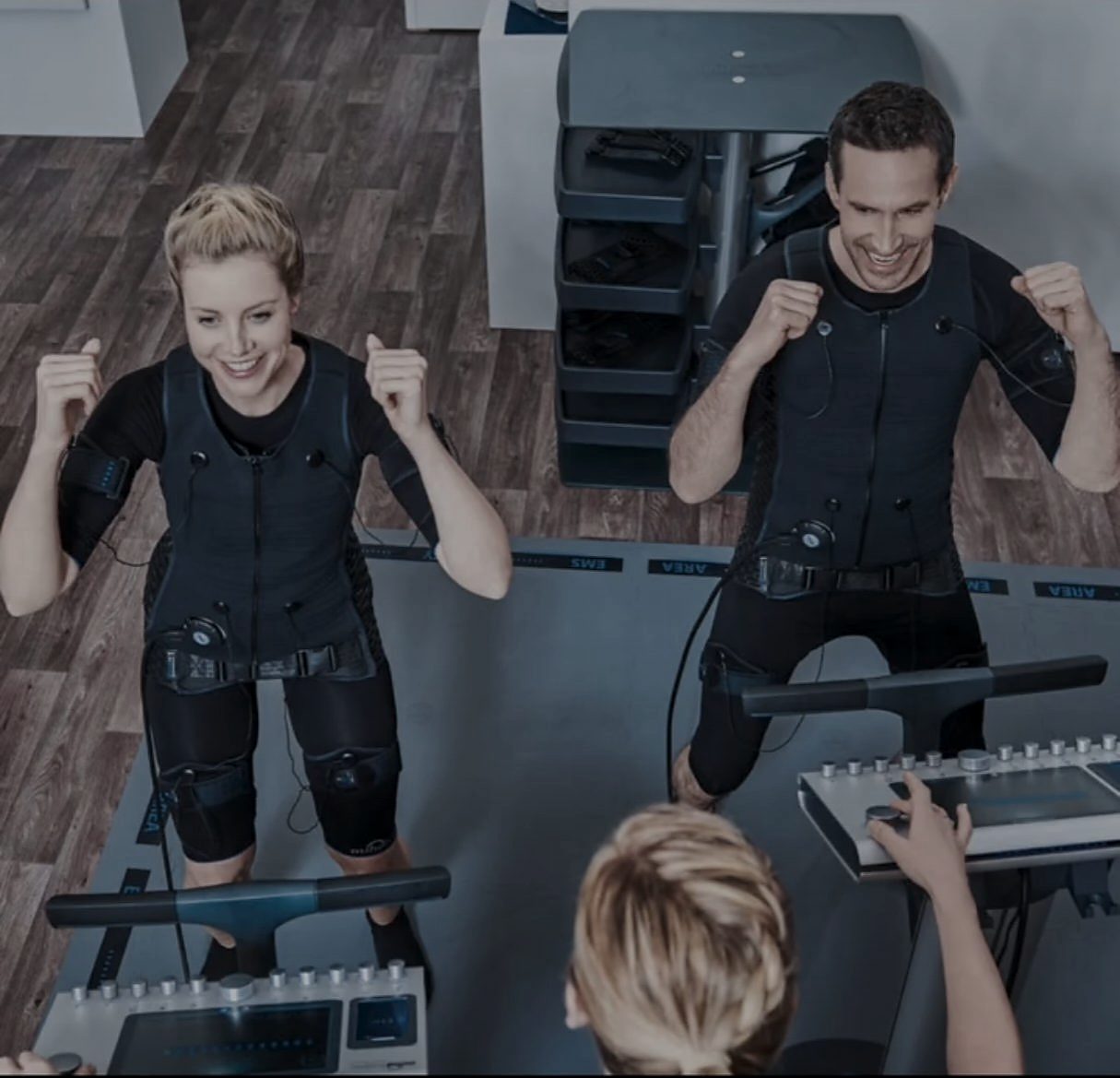 Train as a couple
Not a fad
Forty years of EMS. One big step forward.
Electrical muscle stimulation has been used by physiotherapists and elite athletes since the 1980s. What is new is doing it to the whole body at once, while you move, with a trainer controlling every muscle group.
Strength and conditioning
Where it started in sport: recruiting more muscle fibre than training alone can reach. It is why sprinters, skiers and footballers have used it for decades.
Recovery
Gentle, low-intensity impulses get blood moving through tired muscles. Athletes use it between sessions to feel fresher sooner.
Rebuilding after injury
Physiotherapists use EMS to wake up and rebuild muscle that has switched off after an injury or an operation.
Toning and shape
Stronger, firmer muscle changes how you look and how your clothes fit, which is often the first thing clients mention.
Wellbeing
Better posture, easier movement, more energy for everything else in your week.
All of it, in one session
A whole-body suit works eight muscle groups together in twenty minutes. That is the step forward.
A fair comparison
Whole-body EMS or a home muscle stimulator?
You can buy a small EMS unit online for a few hundred euro. They are good at what they do. They simply do a different job.
| Whole-body EMS with a trainer | Home muscle stimulator | |
|---|---|---|
| Muscles worked | Eight muscle groups at the same time | One or two muscles at a time |
| What you do | Squats, lunges and presses while the impulse is on | Usually sit or lie still with pads stuck on |
| Who sets the intensity | A trainer, muscle group by muscle group | You, by trial and error |
| Technique and safety | Coached and supervised for every second | On your own with the instruction booklet |
| Best for | Full-body strength, shape, posture and back support | Recovery, or rebuilding one muscle after an injury |
| Progress measured | InBody 270 body composition scans | Not measured |
| Time | 20 minutes, once a week | 20 to 40 minutes per muscle, several times a week |
Why people choose it over the gym
It respects your time
Twenty minutes, by appointment, once a week. No travelling to a gym four times a week, no waiting for equipment, no wasted sets.
It is kind to your joints
The impulse supplies the resistance, so there are no heavy bars or plates loading your knees, hips and spine. That matters if you are over forty, carrying an old injury or starting from scratch.
Nothing gets skipped
Chest, arms, abs, upper back, lats, lower back, glutes and thighs all work in the same session. The muscles you would normally avoid get trained too.
Someone is always watching your form
Every session is coached. Your trainer corrects your posture, sets each muscle group to suit you and decides when you are ready for more.
It is private
One client, or one couple, in the studio at a time. No mirrors full of strangers and nobody waiting for your machine.
You can see the numbers
We scan you on the InBody 270 at the start and at regular points after, so you can watch muscle go up and fat come down on paper.
What does it feel like?
Most people describe a strong tingling that turns into a deep tightening, as if someone were squeezing the muscle for you. It is unusual for the first minute and then it simply feels like hard work.
The impulse is not on the whole time. It works in a rhythm: a few seconds on while you hold the movement, then a four-second rest while you reset. As the weeks go by your trainer shortens that rest a little at a time, which is one of the ways the session keeps pace with you.
You decide the intensity. Your trainer raises each muscle group only until it feels strong but comfortable, and can drop any of them in an instant.
What results can I expect?
Everyone responds differently, and we will never promise you a number. The first changes people tend to notice with EMS are posture and core strength: standing taller, a back that complains less, stairs that feel easier. Changes in shape and body composition follow with consistent weekly training and sensible eating.
Because we measure you on the InBody 270, you do not have to take our word, or the mirror’s word, for any of it.
Is it suitable for me?
EMS training suits most healthy adults, from complete beginners to people who already train. It is not suitable if you have a pacemaker or other implanted electrical device, if you are pregnant, or if you have epilepsy, an acute illness, a recent operation, thrombosis or a serious heart condition. If you have any medical condition, check with your GP first and tell us before your trial. We go through a health questionnaire with every new client.
Feel it for yourself. Your first session is free.
A chat about your goals, an InBody 270 scan and a 12-minute trial in the suit. No obligation, and nothing to bring but a bottle of water.
Leixlip, Co. Kildare, minutes from Maynooth, Celbridge and Lucan